Economic crimes cover a wide range of offences, including swindling and fraud, corruption, intellectual property crime, violations of sanctions and counterfeiting, and involve complex financial investigations and asset recovery. Criminal investigations primarily targeting other forms of crime, such as drug trafficking, terrorist activities or trafficking in human beings, also typically involve economic crimes such as money laundering.
Economic crime accounts for the largest number of cases supported by Eurojust, with nearly 6 500 cases handled in 2025. This represents an increase of about 9% compared to the previous year; however, compared to 2020, the number of cases has grown by approximately 70% in five years.
Swindling and fraud
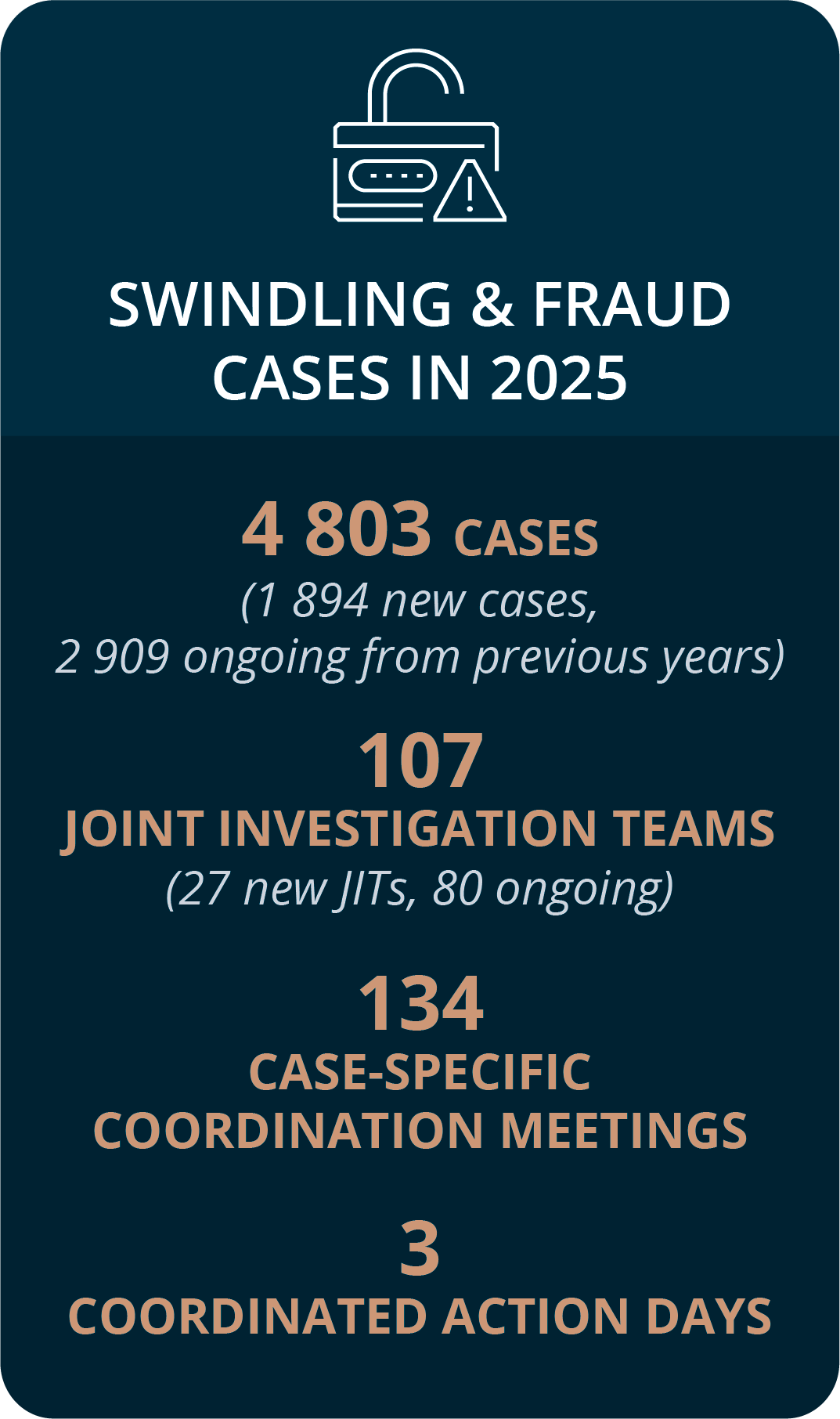
Swindling and fraud remained the most common crime type supported by Eurojust in 2025, accounting for over 4 800 cases. Compared to the previous year, the Agency handled 10% more fraud cases and supported 11% more joint investigation teams.
For EU countries, Italy, followed by Greece, initiated the most swindling and fraud cases at the Agency in 2025. Germany, followed by Spain, was the most frequently requested country to assist in cross-border swindling and fraud cases.
For third countries, Switzerland, followed by Norway, opened the highest number of such cases at Eurojust. The United Kingdom, followed by Switzerland, was the most frequently requested country to assist.
At the European level, investment fraud is one of the most widespread forms of online fraud[1], causing billions of euros in losses to victims each year. Online fraud continues to evolve, with organised crime groups increasingly using automation, artificial intelligence, and deepfake technologies to target and exploit victims.
Numerous challenges in investigating and prosecuting such crimes remain, including:
- underreporting by victims
- difficulties in identifying perpetrators and criminal infrastructures, such as call centres
- limited cooperation with some third countries
- shortages of expertise – particularly in crypto analysis – and obstacles in asset tracing, freezing, and victim compensation due to rapid asset movements and limited recoveries
The challenges underline the need for an effective cross-border cooperation which Eurojust can facilitate by providing judicial guidance, resolving legal issues such as conflicts of jurisdiction, and supporting victim compensation.
Money laundering
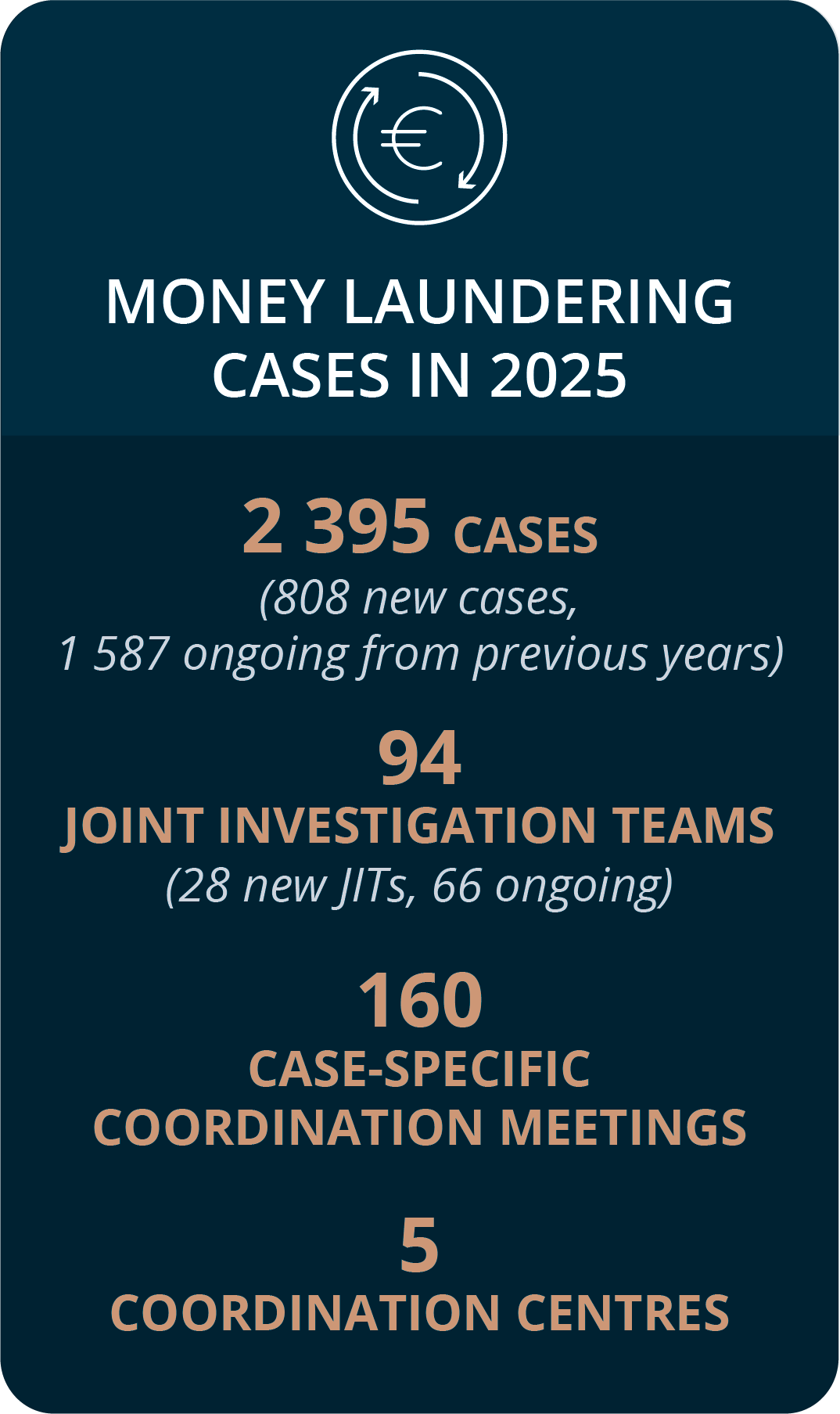
Money laundering is the act of introducing illegally obtained assets into the legal financial and economic cycle. Money laundering is the second largest crime type addressed by Eurojust in 2025. Close to 2 400 money laundering cases were handled, including 808 newly opened ones in the reporting period. The number of coordination meetings in this area grew by 12% in 2025 compared to the previous year.
Among EU countries, Italy, followed by France, initiated the most money laundering cases at the Agency in 2025. Germany and Spain were the countries most frequently requested to assist.
Among third countries, Albania, followed by Georgia, opened the highest number of money laundering cases at Eurojust. The United Kingdom, followed by Switzerland, was the most frequently requested country to assist.
The Judicial Focus Group on Money Laundering and Asset Recovery continued its work in supporting national prosecutors and judges involved in the investigation and prosecution of money laundering and the recovery of criminal assets. The Focus Group, set up in late 2024, became fully operational in 2025, hosting its first annual meeting and providing judicial authorities with guidance on post-conviction financial investigations, exceptional costs concerning the execution of freezing and confiscation orders, and restitution to or compensation of victims. One of the key items presented during their meeting was the Eurojust Casework Report on Regulation 2018/1805 on the Mutual Recognition of Freezing and Confiscation Orders.
Money laundering scheme worth hundreds of millions of euros uncovered
CRIME: A Ukrainian entrepreneur and his son allegedly launder illicit funds gained from illegally selling a majority stake to representatives of a foreign state. The proceeds are laundered by buying properties in France and Monaco.
ACTION: Soon after investigations start, EUR 57 million worth of assets is frozen by the French authorities with the intention of returning them to Ukraine.
RESULT: Several important documents for the investigation are seized. The entrepreneur is already on trial in Ukraine for crimes against national security and is now also suspected of money laundering.
EUROJUST'S ROLE: Eurojust sets up a JIT to facilitate the judicial cooperation between the three countries. Authorities work together with Eurojust to establish a judicial strategy and exchange information.

Corruption
Corruption has many forms and involves a breach of duty, abuse of entrusted power, or other unlawful conduct committed by a person or organisation in a position of authority. Corruption undermines the functioning of public authorities at all levels and is a key enabler of organised crime.

The number of corruption cases supported by Eurojust remains high, with the Agency supporting over 300 cases, one third of which were newly referred during the year. There was a slight increase in the corruption-related JITs and coordination meetings in 2025 compared to 2024, which shows the growing complexity of corruption cases and the need for structured cross-border cooperation. When it comes to support, the early involvement of the judiciary is crucial along with the timely exchange of financial and banking data. Trends also show that the expertise in complex financial investigations needs to be strengthened to adequately combat this crime type.
France and Romania are the EU countries that initiated the most corruption cases at Eurojust in 2025, with France, Spain and Germany being the EU countries most frequently requested to assist. For third countries, Albania, followed by Ukraine opened the highest number of such cases at the Agency, while Switzerland was the third country most frequently requested to assist.
During the year, Eurojust continued to participate in the European Commission’s EU network against corruption to ensure prevention and develop best practices and guidelines to fight corruption effectively. In addition, Eurojust joined the following corruption-related networks as an observer: the European Partners against Corruption (EPAC) and European Contact-Point Network against Corruption (EACN), and the Global Operational Network of Anti-Corruption Law Enforcement Authorities (GlobE Network).
Crimes against the financial interest of the EU (PIF crimes)
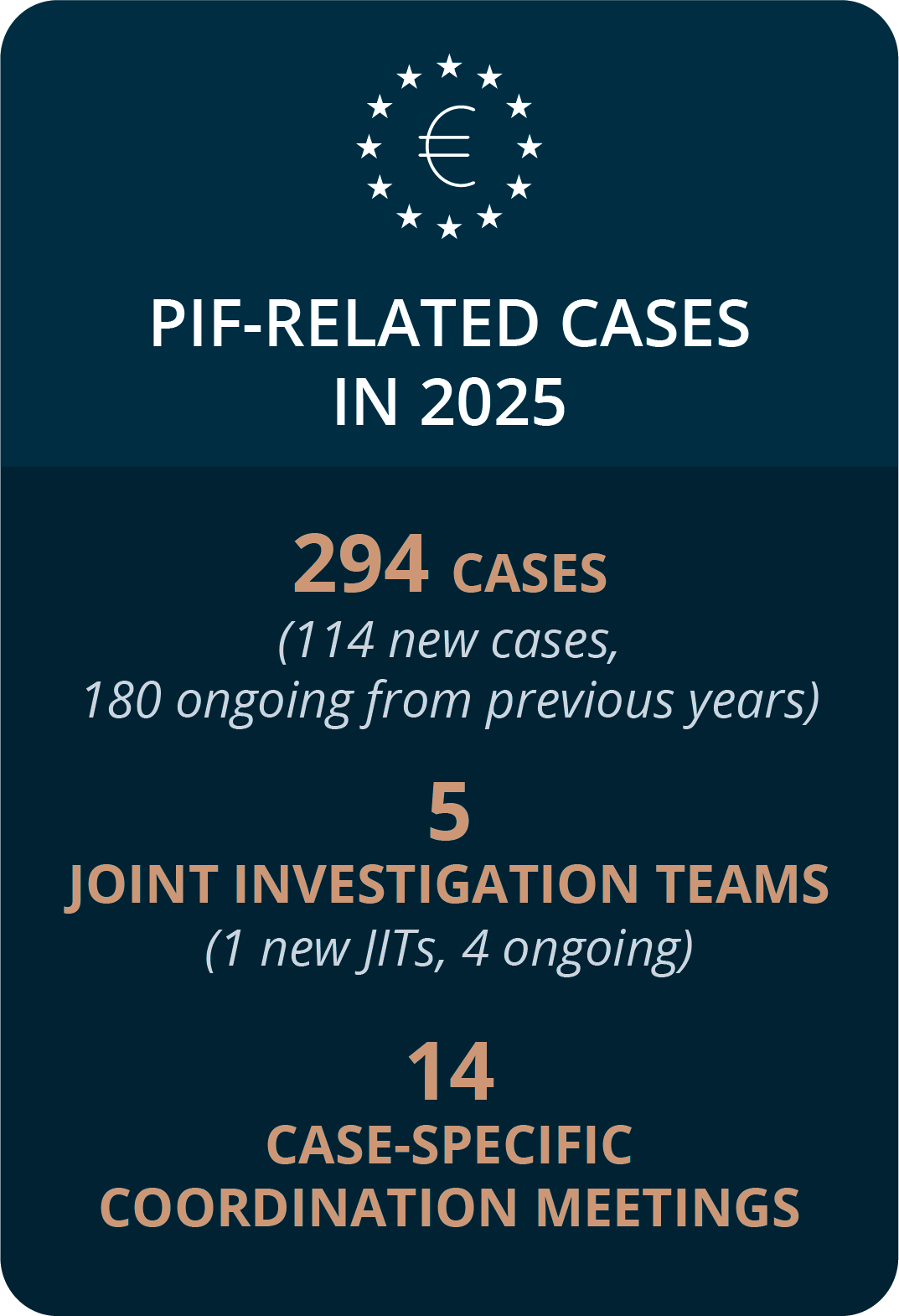
Crimes against the financial interests of the European Union (known as PIF crimes) include fraud related to the EU budget, large-scale VAT fraud affecting two or more Member States, corruption, misappropriation of assets committed by a public official, and money laundering involving property derived from these crimes.
Eurojust supported close to 300 PIF-related cases in 2025, a slight increase from the previous year. Over 100 of these cases were newly opened in 2025.
Germany, followed by Bulgaria, is the EU country that initiated the most PIF-related cases at the Agency in 2025. Germany, followed by France, Italy and Belgium were most frequently requested to assist in cross-border PIF-related cases at Eurojust in 2025.
In 2025, the United Kingdom and the United States were the third countries most frequently involved in PIF-related cases at the Agency.
Eurojust has established and maintains close relations with the European Anti-Fraud Office and the European Public Prosecutor’s Office to investigate these types of crimes.
Strategic developments impacting Eurojust’s PIF casework
In 2025, Eurojust contributed to the review of the EU’s Anti-Fraud Architecture, an initiative proposed by the European Commission aimed at modernising the policies and institutions protecting the EU budget in light of the increasing complexity of fraud. Eurojust is committed to strengthening its coordination between the EU’s Anti-Fraud actors such as OLAF, EPPO, Europol, and the new Anti-Money Laundering Authority in a coordinated anti-fraud framework. While the outcome of the review is ongoing, Eurojust stands ready to further strengthen its role as a central hub for judicial coordination in complex cross-border fraud cases. By enhancing cooperation with key partners Eurojust can help ensure a seamless link between detection, investigation and prosecution across jurisdictions within and outside the EU.
 Eurojust is an agency of the European Union