
Eurojust has published a new report presenting key findings of the landmark judgment of the European Court of Human Rights (ECtHR) in the inter-State case of Ukraine and the Netherlands v. Russia. The report examines four aspects of the judgment of particular relevance to judicial practitioners and Eurojust’s work, including the Court’s approach to evidence and its findings concerning the investigation into the downing of Malaysia Airlines flight MH17.
Delivered by the Grand Chamber of the ECtHR on 9 July 2025, the nearly 500-page judgment addresses Russia’s responsibility for widespread human rights violations connected to the conflict in eastern Ukraine since 2014 and its military operations in Ukraine since 24 February 2022.
The judgment has significant implications beyond the case itself. The Court found more than 20 violations of the European Convention on Human Rights, with all findings of violations adopted unanimously. Its conclusions are expected to influence the Court’s future case law and may also provide important points of reference for national courts and other international judicial institutions.
The MH17 investigation and Eurojust
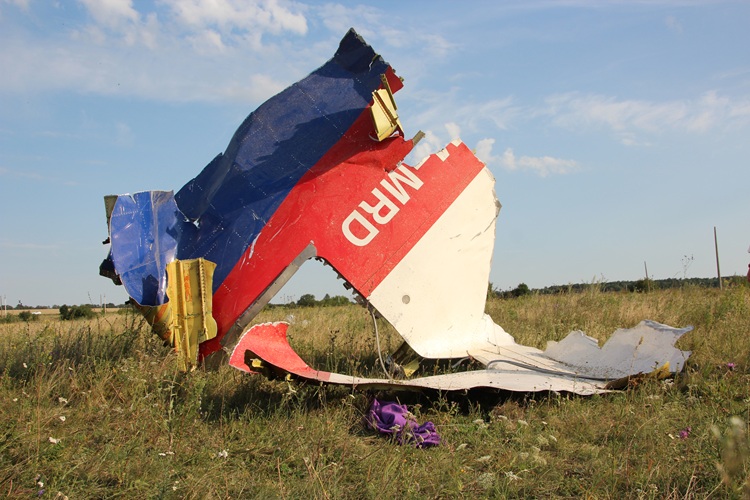
The facts examined by the Court include the downing of flight MH17 over eastern Ukraine on 17 July 2014, in which all 298 people on board were killed.
In that regard, the judgment is closely connected to a case in which Eurojust has provided long-standing judicial coordination support. Following the downing of flight MH17 in July 2014, a counter-terrorism case was opened at Eurojust and a JIT was established to support the criminal investigation.
In focus
The new Eurojust report sets out to examine some of the Court’s findings and what they may mean in practice for judicial practitioners and Eurojust. Rather than providing a comprehensive overview of the judgment, it focuses on four areas particularly relevant to the Agency’s mandate:
- the Court’s approach to different categories of evidence, including open-source evidence;
- the relationship between the European Convention on Human Rights and international humanitarian law;
- the Russian investigation into the downing of flight MH17 and its cooperation with the joint investigation team (JIT); and
- the suffering of the relatives of flight MH17 victims caused by the conduct of the Russian authorities.
For each area, the report also identifies practical takeaways and considers the potential implications of the Court’s findings for judicial practitioners and Eurojust.
 Eurojust is an agency of the European Union