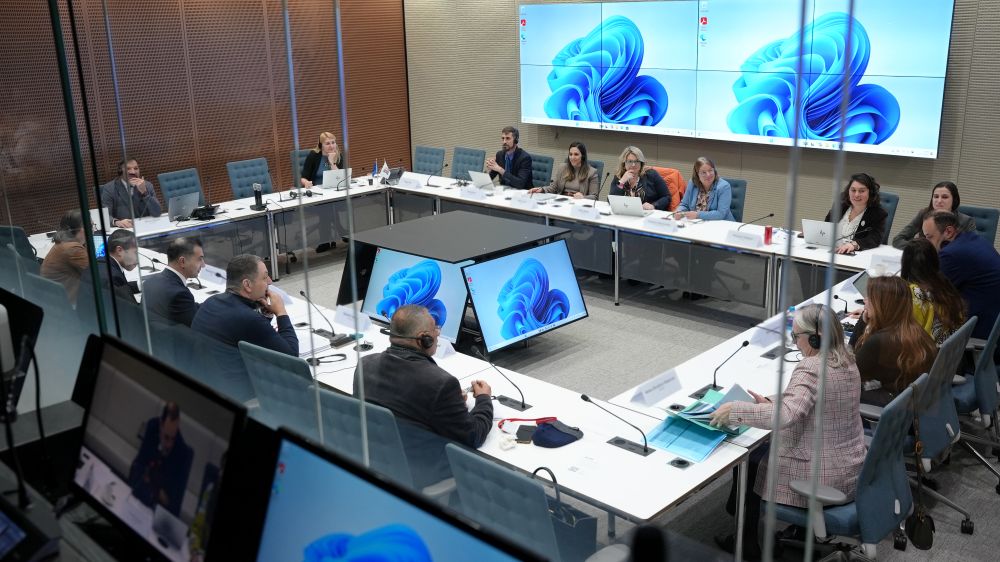
A EuroMed Justice Network (EMJNet) meeting was held on 3-4 February at Eurojust, in The Hague, bringing together 33 criminal justice practitioners from six South Partner Countries (SPCs) – Egypt, Israel, Lebanon, Libya, Morocco and Palestine* – and 11 EU Member States participating in the EuroMed Justice project. The meeting addressed the topics of conflict of jurisdiction and Joint Investigation Teams (JITs).
During the meeting, Eurojust’s Casework Unit and the JITs Network Secretariat presented the support Eurojust can provide in the field of judicial cooperation, including in relation to parallel investigations, conflict of jurisdiction and JITs. Participants presented a number of cases concerning conflict of jurisdiction and JITs, including situations in which non-EU Member States conducted parallel investigations or supported a JIT without being a formal member.
Drawing on their own experience, participants discussed the challenges, benefits and suitability of JITs and shared best practices. The resulting recommendations will be submitted to the CrimEx meeting in May.
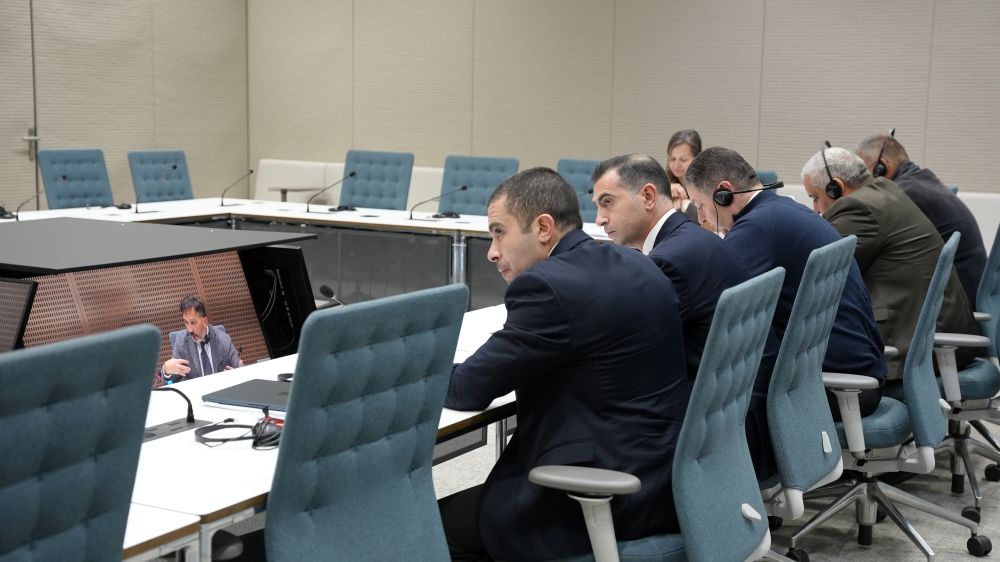
On the second day of the meeting, representatives of the SPCs took part in a workshop. Participants were requested to prepare for a coordination meeting to discuss a trafficking in human beings case involving three States. The workshop was designed and led by the JITs Network Secretariat and facilitated with the support of representatives from several EU Member States. It provided participants with a concrete, first-hand experience of how judicial and law enforcement authorities are brought together in a coordination meeting to facilitate cooperation and coordinate investigations and prosecutions at national level, including through the possible setting up of a JIT.
A JIT is one of the most advanced tools used in international cooperation in criminal matters. It is based on a legal agreement between the competent authorities of two or more States for the purpose of carrying out criminal investigations. Prosecutors, judges and law enforcement authorities work closely together in JITs, which are established for a fixed period.
Relevant Eurojust guidelines have been translated into Arabic and are or will be made publicly available in the online repository on the EMJ website and on the Eurojust website:
- Guidelines on Joint Investigation Teams Involving Third Countries
- Guidelines for deciding 'Which jurisdiction should prosecute?'
- Model agreement for setting up a Joint Investigation Team
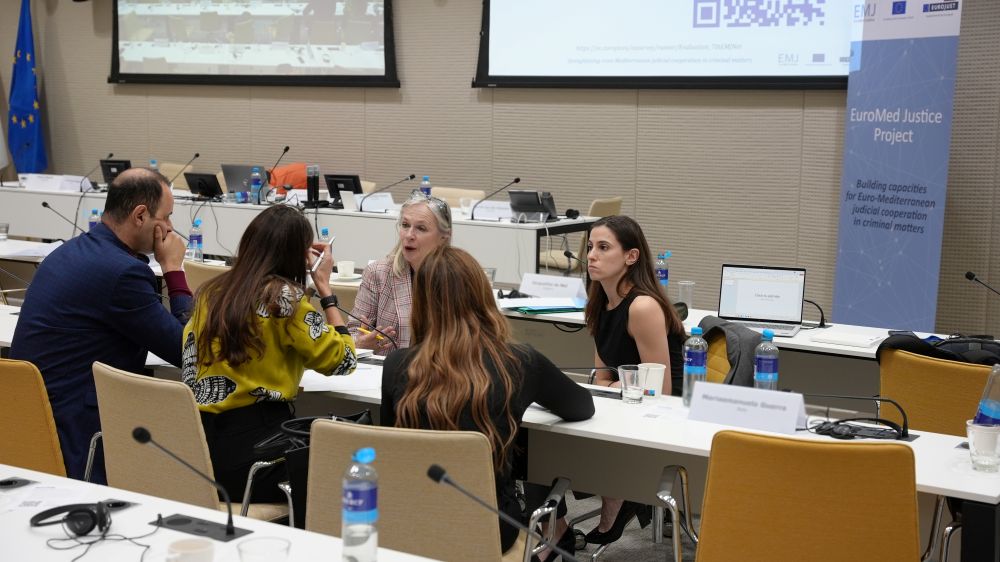
In the margins of the event, 16 bilateral meetings were organised between SPCs and EU Member States, as well as with Eurojust. The EuroMed Justice project facilitates the organisation of bilateral meetings among representatives participating in its activities, providing opportunities for face-to-face operational discussions, for instance on cases and judicial cooperation. Regular meetings and exchanges among the EMJNet contact points contribute to strengthening the network and building trust among the contact points.
* This designation shall not be construed as recognition of a State of Palestine and is without prejudice to the individual positions of the Member States on this issue.
 Eurojust is an agency of the European Union