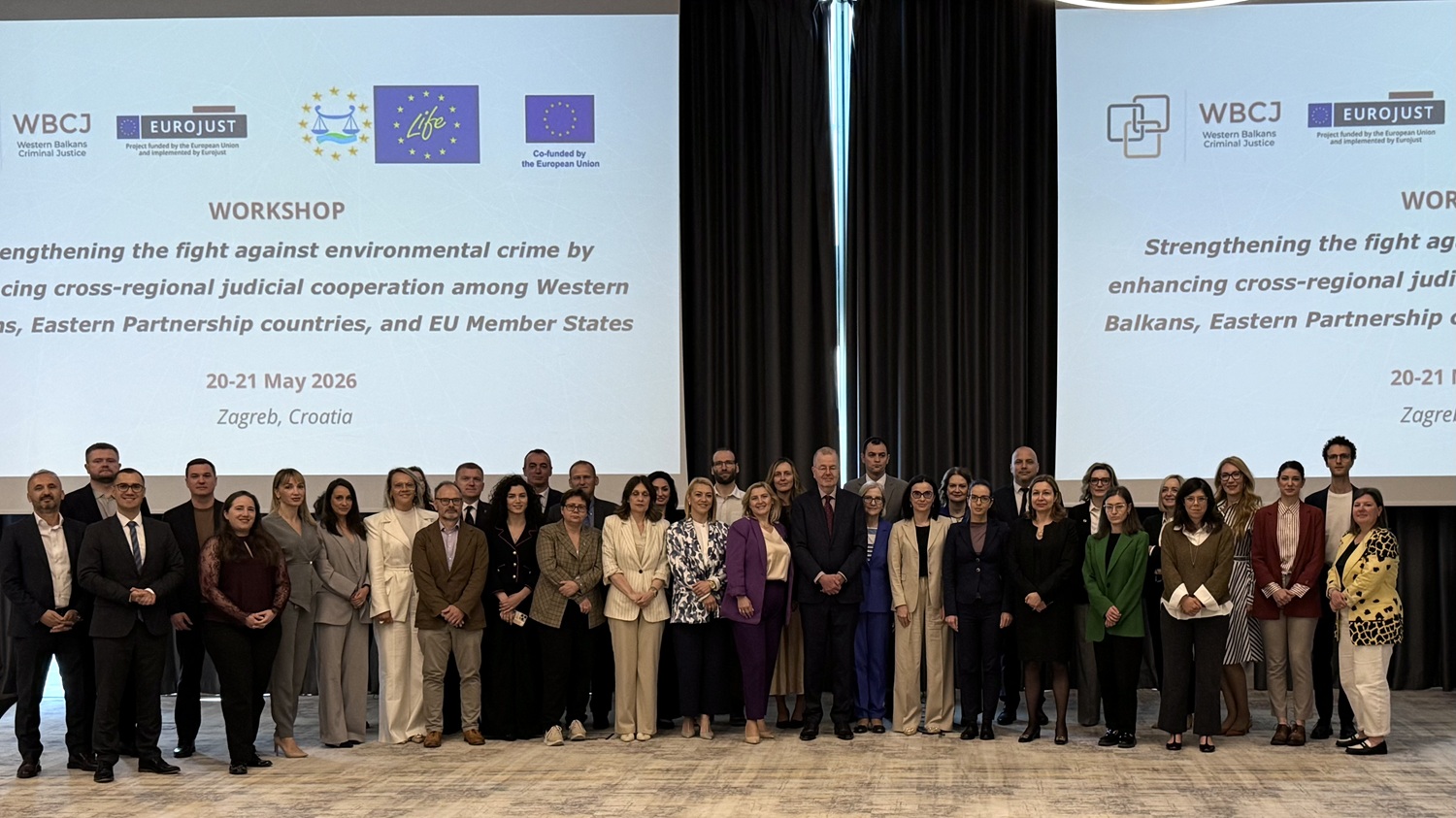
On 20–21 May 2026, the Western Balkans Criminal Justice (WBCJ) Project, implemented by Eurojust, in cooperation with the European Network of Prosecutors for the Environment (ENPE), organised the second regional workshop on environmental crime in Zagreb, following the successful first edition held in Ohrid in 2025. The event focused on strengthening the fight against environmental crime through enhanced cross-regional judicial cooperation among the Western Balkans, Eastern Partnership countries, and EU Member States.
Environmental crime remains an evolving and often overlooked threat, with criminal networks often adapting faster than judicial and law enforcement responses. Its broad and transnational nature requires strong cooperation among competent authorities, supported by technical expertise and the effective use of judicial cooperation tools.
The workshop brought together prosecutors from Albania, Armenia, Bosnia and Herzegovina, Bulgaria, Croatia, Finland, France, Ireland, Kosovo*, Moldova, Montenegro, North Macedonia, Romania, Serbia, Ukraine, and other jurisdictions, alongside experts from Eurojust, ENPE, EMPACT, and the Council of Europe. Discussions covered recent legislative developments, including the EU Environmental Crime Directive and the Council of Europe Convention, as well as practical case studies and best practices.
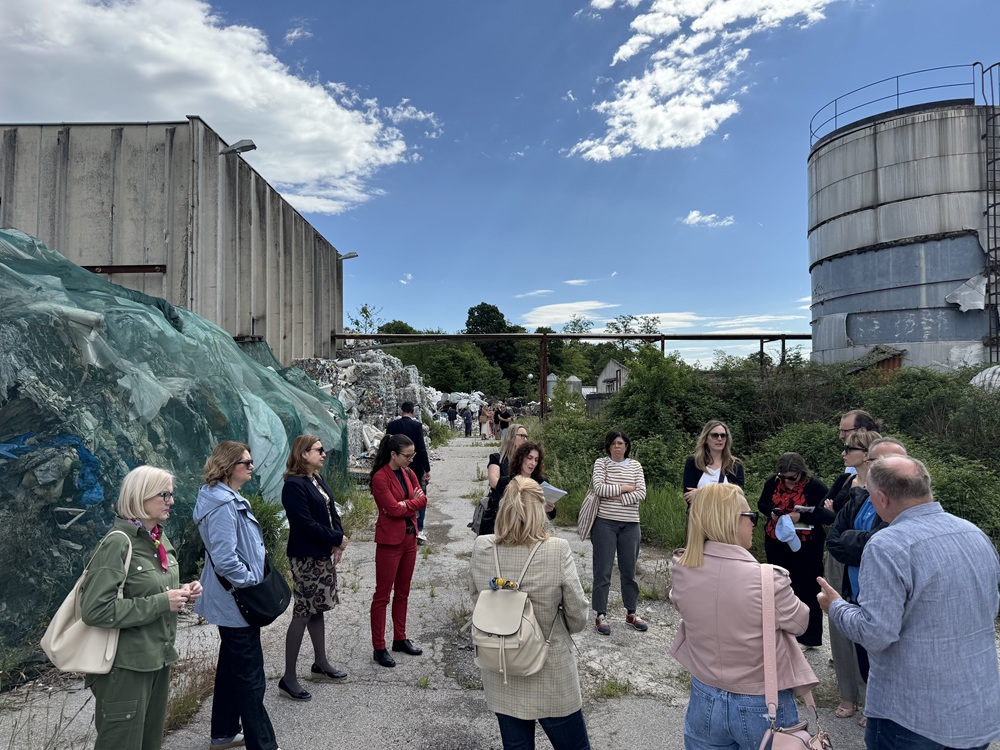
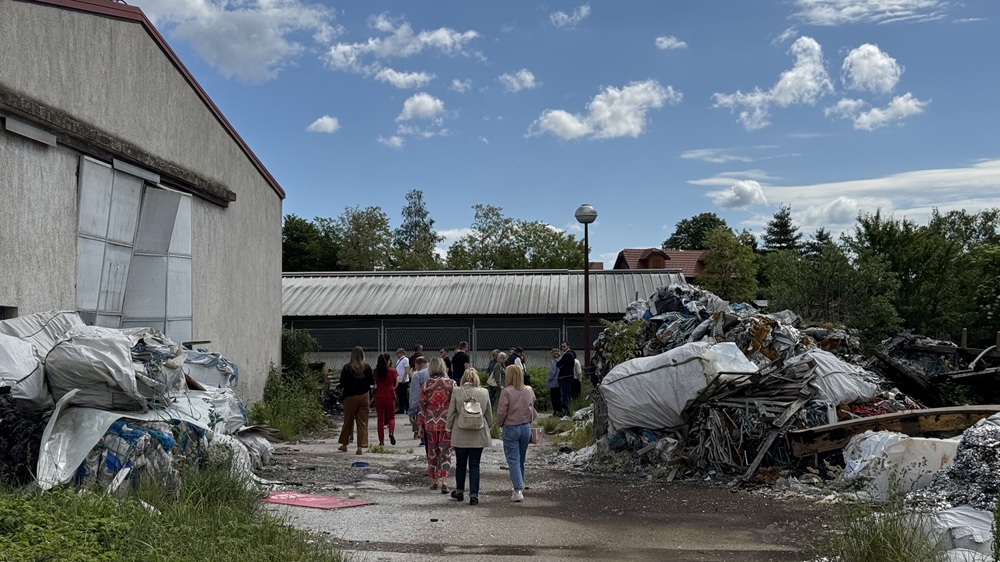
Participants also examined how Eurojust and ENPE can further support national authorities in strengthening cross-border cooperation and making use of new legal frameworks to improve environmental crime prosecutions. The second day included a field visit, offering practical insights into investigative realities and evidence collection.
Coinciding with the 20 May 2026 deadline for Member States to transpose the new EU Environmental Crime Directive, the workshop further strengthened trust, the exchange of expertise and operational cooperation among practitioners. It underlined the importance of coordinated cross-border action in protecting the environment and tackling environmental crime across regions.
 Eurojust is an agency of the European Union