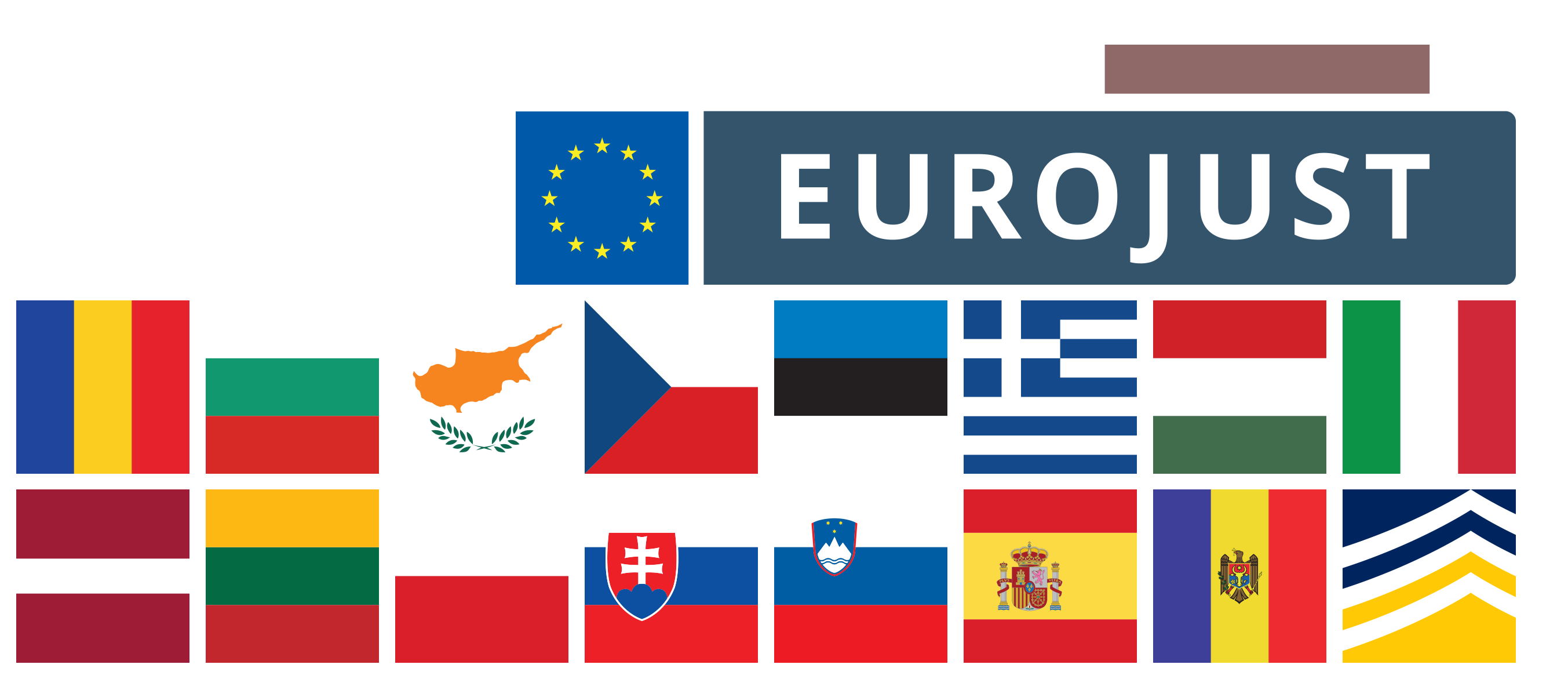
 Authorities from 15 countries worked together on 12 May to takedown a dangerous criminal group responsible for defrauding victims across Europe and beyond with fake supplements and medicines. The group allegedly claimed to sell legitimate medicines that cured serious illnesses. Their illegal activities generated EUR 240 million in illicit transactions. A coordinated action day resulted in the collection of important evidence, the detention of some of the main members of the group and the seizure of large supplies of supplements. Eurojust and Europol supported the investigations from the outset, ensuring efficient and effective cooperation between the 15 countries.
From 2019, the group worked operated in a professional, hierarchical way. They set up companies through which they marketed supplements that were not authorised for sale. The criminal group sold over 400 differently named supplements. A network of virtual sellers built hundreds of websites and social media pages, often using the names and images of famous people and fake doctors to mislead victims from across the European Union and beyond. The criminal group trained their affiliates to create fake social media accounts, make them appear legitimate and avoid detection by social media companies.
When their victims filled in a form on one of the websites, the criminal group would contact them through one of its call centre operators. Appearing to be doctors or medical specialists, the operators claimed that their supplements were genuine treatments for incurable or serious diseases. The supplements distributed by the criminal had no effect on the human body and all contained similar ingredients, despite claiming to treat different diseases. By misleading their victims with these fake medicines, the criminal group caused serious harm. The investigation revealed that victims stopped taking the prescribed treatment by their doctor. Whenever a product would accumulate too many complaints, it would simply by renamed and relaunched. It is suspected that the group generated at least EUR 240 million in transactions.
After victims came forward, Romanian authorities began investigating the criminal group and uncovered a large international network operating across Europe. To complicate matters, the criminal group used legitimate companies from across Europe to run their operations. International judicial cooperation was essential to gather evidence and witness testimonials and take actions against the members of the group located and the group’s call centres.
A joint investigation team comprising of Romanian, Hungarian, Polish, Bulgarian and Moldovan authorities, set up at Eurojust, was at the core of this collaboration. During ten coordination meetings at the Agency’s headquarters in The Hague, investigators shared information and uncovered the criminal group’s international links. To collect evidence and hear witnesses, a coordinated action day was planned, with actions taking place simultaneously in 15 countries. On the action day, Europol set up a Virtual Command Post (VCP) and deployed experts to assist the intervening authorities on the spot.
The action day, coordinated by Eurojust from its headquarters, took place on 12 May. Authorities searched 113 locations in Bulgaria, Greece, Hungary, Poland, Romania and the Republic of Moldova. Evidence was requested to companies in eight countries and 23 witnesses were interviewed so far. In Romania, 196 websites used to promote and sell the supplements were blocked. During searches During searches in Hungary and Romania, large quantities of supplements were seized and will now be analysed. In Bulgaria, the central warehouse of the criminal group was identified where large amounts of supplements were found that will also be further analysed. In Poland, assets worth EUR 1.8 million was frozen.
The joint investigation team was able to identify the majority of the suspected members of the group and detained some of the main members in Poland, Romania and the Republic of Moldova. Investigations into the criminal group will continue, while more information will be collected and more witnesses and suspects will be interviewed.
Illicit medicines not only fund criminal groups across the globe, but also cause serious harm to their victims. There is a greater risk of purchasing illicit medicines that have not undergone rigorous evaluation processes to ensure they are fit for the EU market when buying medicines from unregistered sources. Authorities warn citizens to only buy medicines from registered online pharmacies. The European Medicines Agency, together with its national counterparts, has created a logo for online medicine retailers registered with their national regulatory authorities.
The actions were carried out by the following authorities:
- Romania: Prosecution Office of The High Court of Cassation and Justice; Directorate for Investigation of Organized Crime and Terrorism; Iasi Territorial Service; Romanian Police
- Bulgaria: Regional Prosecution Office in Sofia; Sofia City Prosecution Office; Sofia Regional Police Directorate of Internal Affairs; General Directorate for Combating Organized Crime- Cybercrime Directorate
- Hungary: Budapest Economic Crimes Prosecution Office; National Bureau of Investigation Cybercrime Department
- Poland: District Prosecutor’s Office in Warsaw; Central Cybercrime Bureau; National Revenue Administration
- Republic of Moldova: Prosecutor’s Office for Combating Organized Crime and Special Cases; the National Investigation Inspectorate
- Cyprus: Attorney General’s Office; Cyprus Police
- Czech Republic: Municipal Public Prosecutor’s Office in Prague; Police of the Czech Republic, Regional Police Directorate for the Capital City Prague – Economic Crimes Division
- Estonia: Office of the Prosecutor General; Police and Border Guard Board
- Greece: Public Prosecutor’s Office of Appeals of Athens; Investigating Judge of the First Instance Court of Athens; Directorate against Organized Crime/Financial Crime Subdirectorate of Athens; Forensic Science Directorate/Digital Forensic Research and Analysis Subdirectorate of Athens
- Italy: Public Prosecution Office Milan; Financial Police
- Latvia: International Cooperation Department of the Central Criminal Police Department of the State Police of Latvia
- Lithuania: Kaunas Regional prosecutor’s Office; Vilnius Regional Prosecutor’s Office
- Slovakia: Regional Prosecutor´s Office in Bratislava; National Center for Special Types of Crime of the Presidium of the Police Force
- Slovenia: District Court of Ljubljana; Specialised State Prosecutor's Office of the Republic of Slovenia; Police Directorate Ljubljana
- Spain: International Cooperation Unit of PPO Madrid; UDEV - Policia Nacional
 Eurojust is an agency of the European Union