
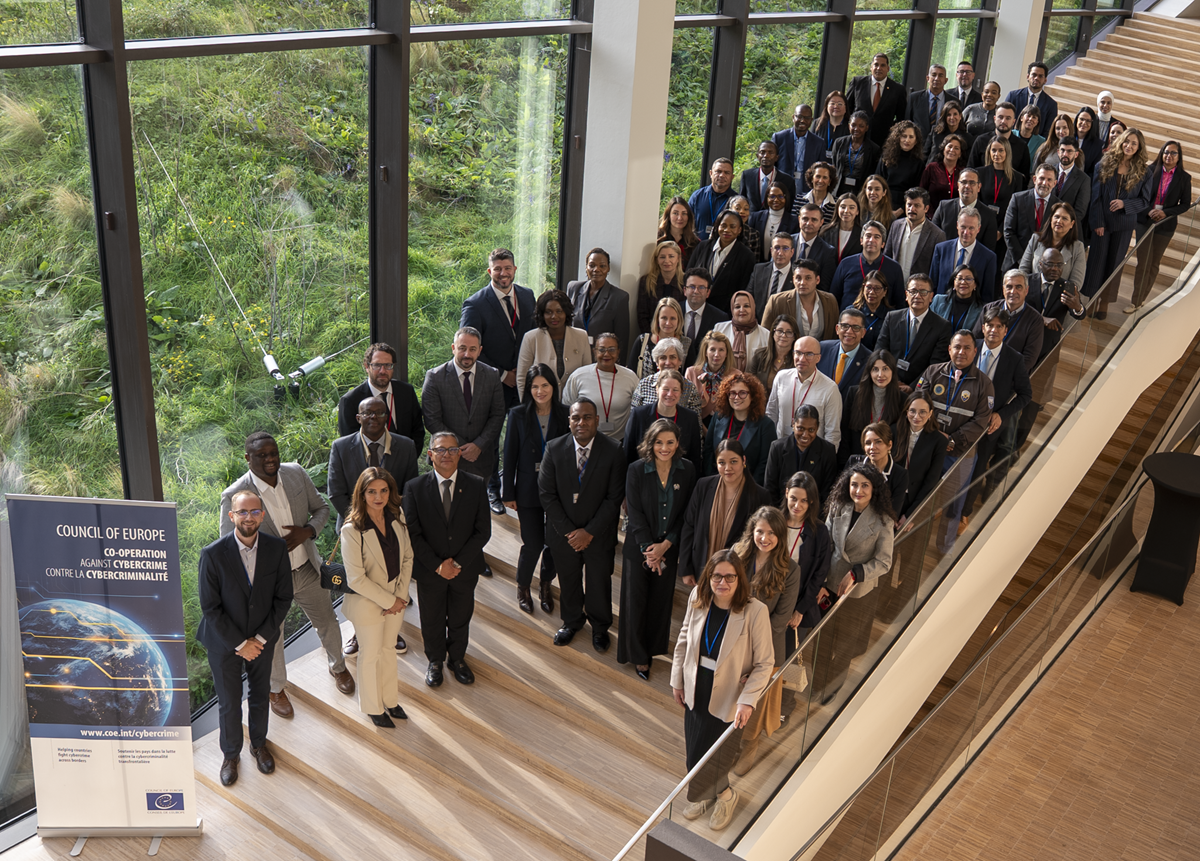
Online abuse aimed at women and girls is growing in scale and complexity, which presents judicial systems with demanding new challenges. On 9-10 November, judges and prosecutors from 50 countries met at Eurojust to examine how such cases are identified, prosecuted and adjudicated, and to strengthen cooperation across borders.
Harassment, cyberstalking, threats, the non-consensual sharing of intimate images, and gender-based hate speech can reach victims at any hour, spread to vast audiences instantly, and persist long after the original act takes place. This abuse also rarely stays online. Frequently, it intersects with offline violence and discrimination that disproportionately affects women and girls.
For judicial authorities, these cases present distinct challenges. Determining the right legal classification can be difficult when the conduct does not fit into a specific offense or falls across several. Electronic evidence can disappear quickly and the data may be held in another jurisdiction. Many victims are reluctant to report, which makes prosecution more difficult. Throughout, victims need protection from further harm, and privacy, freedom of expression and human rights safeguards must be respected.
These issues were the focus of a two-day workshop on the gender dimension of cybercrime, jointly organised by Eurojust and the Cybercrime Programme Office of the Council of Europe (C-PROC). The workshop brought together judges and prosecutors experienced in cyberviolence cases from countries that are Parties or Observers to the Budapest Convention on Cybercrime.
Sessions examined gender-based violence in the context of new technologies and the international standards that apply, including the Budapest Convention, the United Nations Convention against Cybercrime and the Istanbul Convention. Discussions also covered privacy violations, cybercrime and hate crimes, and online sexual violence, including the sexual abuse of girls and minors. In case-based exercises, participants also assessed evidence and compared judicial approaches in plenary.
Across both days, the event aimed to give participants the practical tools to recognise the different forms of technology-facilitated gender-based violence, understand their impact on victims, overcome obstacles in prosecution and strengthen cross-border collaboration.
 Eurojust is an agency of the European Union