
The Belgian Desk is headed by Hilde Vandevoorde, who is the National Member for Belgium since December 2017.
In 2025, the Belgian Desk was involved in 432 new cases, 98 coordination meetings, 5 coordination centres and 46 joint investigation teams.
The Belgian Desk is headed by Hilde Vandevoorde, who is the National Member for Belgium since December 2017.
In 2025, the Belgian Desk was involved in 432 new cases, 98 coordination meetings, 5 coordination centres and 46 joint investigation teams.
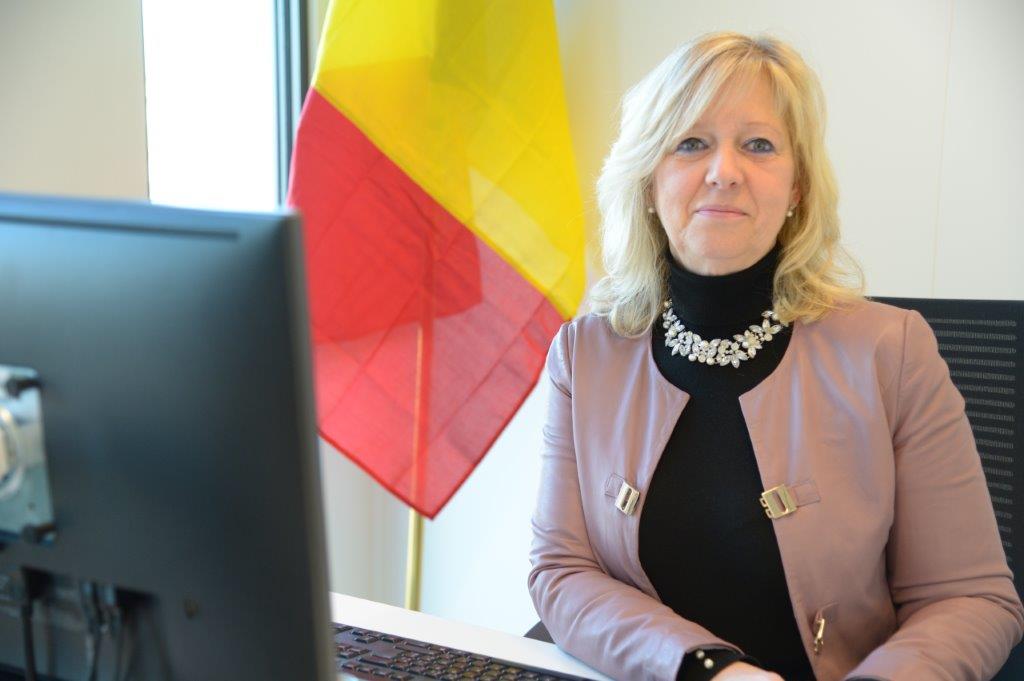
Hilde Vandevoorde was appointed National Member for Belgium in December 2017. She has dedicated her career to the fight against organised crime and terrorism. After working as a defence lawyer, she became a prosecutor in Brussels, specialised in organised crime and terrorism cases. In 2000, Mrs Vandevoorde was appointed a national magistrate. She joined the Federal Prosecutor’s Office in 2002, coordinating organised crime and terrorism cases on national and international levels. She served as Head of the Special Missions Unit in charge of special investigation techniques, undercover investigations and Covered Human Intelligence Sources (‘CHIS’/informants). During that time, she was also responsible for the witness protection programme, as well as for the review of the federal judicial police. Mrs Vandevoorde has brought cases to Eurojust since its establishment, and is looking forward to handling Belgian cases at Eurojust and coordinating with the other Member States and beyond.
Wenke Roggen joined the Belgian Desk in April 2022 as Deputy National Member. As federal magistrate, she has been prosecuting acts of terrorism and serious violations of international humanitarian law since 2013. Previously, as First Deputy Public Prosecutor, she led the sections of serious and organised crime and sexual offences of the Brussels Prosecutor's Office.
What strikes you most about working at Eurojust?
The good working relations that are existing between all the desks. The friendly and professional way the contacts between colleagues are taking place are really one of the most special things about working at Eurojust.
All problems, big and small, in the field of international cooperation in criminal matters are addressed in the same professional and respectful way.
Could you describe a case that you have supported and which had a particularly successful outcome?
As the cases at Eurojust are considered confidential, it is very difficult to give details of cases, but I can refer to several crime types handled at the Belgian desk: counter terrorism, organised crime groups, human trafficking, drug related criminality, cybercrime…etc.
Which of the services and tools available through Eurojust do you consider most important for national judicial authorities – and why?
One of the most important tools Eurojust can provide is the organisation of coordination meetings. Bringing all colleagues from involved Member States and third States together around the table with the necessary interpretation and logistics has proven to be the best way to achieve good results in the coordination between ongoing judicial investigations in different countries. The possibilities that Eurojust offer in the framework of the Joined Investigation Teams is another important tool. The support can be of different nature, but the financial support is of course a big help for the involved countries.
To conclude, we should not forget the help Eurojust can offer on both operational and strategic level via the support of the colleagues of the Eurojust staff.
2019 | 2020 | 2021 | 2022 | 2023 | 2024 | 2025 | |
|---|---|---|---|---|---|---|---|
New cases (total) | 261 | 280 | 387 | 420 | 481 | 445 | 432 |
Coordination meetings (initiating and/or participating) | 82 | 56 | 84 | 89 | 95 | 103 | 98 |
Coordination centres (organising and/or participating) | 5 | 4 | 3 | 5 | 5 | 6 | 5 |
Joint investigation teams (newly signed and/or ongoing) | 31 | 26 | 27 | 26 | 31 | 32 | 46 |
 Eurojust is an agency of the European Union